Randburg has a story that goes back further than most people think. Long before the malls and office parks, this part of Johannesburg was just open veld and a handful of farms. Here is how Randburg grew into the town it is today.
How Randburg Got Its Start
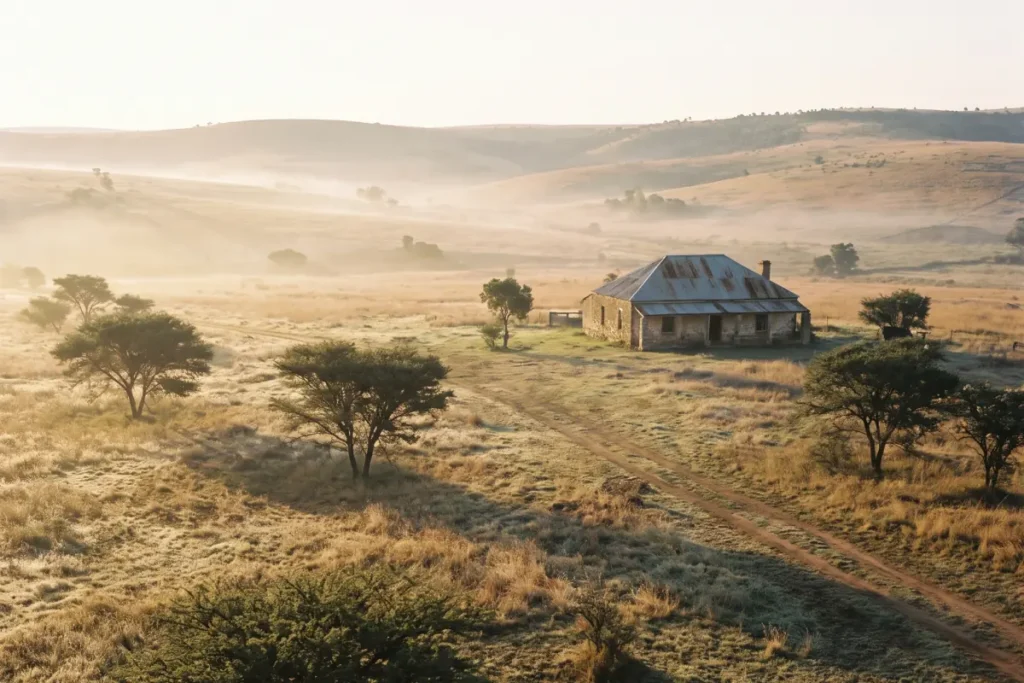
The land that became Randburg started out as four farms in the 1850s. Boer pioneers settled here and called their farms Klipfontein, Driefontein, Olievenhoutspoort, and Boskop. Over time, these farms were split up among family members, as was common practice back then.
For decades, the area stayed quiet and mostly rural. Then the Great Depression hit South Africa between 1928 and 1934. A long drought made things worse. Farmers from the platteland moved to the cities looking for work, and many chose to settle in this area instead of heading further into Johannesburg.
By the 1950s, things had started to shift. Commercial development began in 1956, and retail businesses slowly moved in. This was the turning point that set Randburg on its path to becoming a proper town.
Why Randburg Got Its Name
Randburg needed an official name once it was ready to become its own municipality. So the council ran a competition to find one. A few odd names were on the table, including Fairydale, Ego, and Zuriel.
In the end, Randburg won out. The name comes from the South African Rand, which had just been introduced as the country’s currency. It felt fitting for a town built on new commercial growth.
Randburg Becomes a Town
Randburg was officially proclaimed a town in 1959. It came together by joining 32 separate suburbs, including Bromhof, Cresta, Fairlands, and Olivedale. The town covered close to 100 square kilometres once its borders were set.
In 1968, Johannesburg suggested folding Randburg into its own municipal boundaries. Randburg said no thanks and stayed independent for a good while longer. By 1972, the Town Council had laid down clear guidelines for developing townships, residential areas, and the central business district.
Randburg only became part of the City of Johannesburg Metropolitan Municipality later, during the transition between 1996 and 2000.
Randburg’s Growth Over the Decades
Once the town had proper planning in place, growth followed fast. Randburg had no heavy industry by design. Instead, the focus stayed on residential quality, along with some light industry like printing plants and small engineering works.
This approach paid off. Randburg became known as an affordable alternative to Sandton, with lower property prices and cheaper rentals. Families moved in for the good schools and leafy streets. Businesses followed for the central location and easy access to major roads like the N1 Western Bypass.
Landmarks That Tell Randburg’s Story
A few places in Randburg capture its growth better than words can.
Ferndale on Republic
This spot started life in 1996 as the Randburg Waterfront, built around a lake fed by the Jukskei River. It later got a refurbishment and reopened as Brightwater Commons, with open lawns, walking paths, and a stage for live events. In 2019, the Moolman Group led a full redevelopment, and the centre was renamed again, this time to Ferndale on Republic. The open lawns and water features made way for parking and a large new shopping mall, anchored by retailers like Checkers, Pick n Pay, and Dis-Chem. It still sits in the same spot in Ferndale, close to the old Randburg CBD, but it looks and functions very differently today.
Cresta Shopping Centre
Cresta is not just a mall. It is one of the biggest shopping centres in the whole southern hemisphere, and it has gone through at least eight expansions over the years. It stands as proof of just how much retail demand grew in this part of Johannesburg.
The Pedestrian Mall Clock
Near the old town centre, a well known clock has marked the entrance to Randburg’s pedestrian mall for years. It is a small landmark, but locals who grew up here will know it immediately.
Northcliff Hill and Its Water Tower
On the edge of Randburg stands Northcliff Hill, topped by its famous water tower. The hill sits close to 1 800 metres above sea level, making it one of the highest points anywhere in Johannesburg. From the top, you get sweeping views over Randburg and the wider city skyline. The water tower itself has stood for decades, though sources differ on whether it dates back to 1939 or the 1960s. Either way, locals treat it as a familiar marker on the horizon, especially at sunset.
Johannesburg Botanical Gardens
Just south of Randburg, in nearby Emmarentia, the Johannesburg Botanical Gardens offer over 80 hectares of green space. The gardens grew out of a rose garden first planted in the 1960s, and today they hold thousands of roses, along with a lake, walking paths, and open lawns. It remains a popular weekend spot for residents from Randburg and beyond, whether for a quiet walk or a wedding photo shoot.
A Quick Timeline
| Year | What Happened |
|---|---|
| 1850s | Four farms settled by Boer pioneers |
| 1928-1934 | Great Depression brings new residents to the area |
| 1956 | Commercial development begins |
| 1959 | Randburg proclaimed a town, name chosen by competition |
| 1968 | Randburg stays independent from Johannesburg |
| 1996 | Randburg Waterfront opens, later becomes Brightwater Commons |
| 2019 | Brightwater Commons redeveloped and renamed Ferndale on Republic |
| 1996-2000 | Randburg joins City of Johannesburg Metropolitan Municipality |
Randburg Today
These days, Randburg is home to a large and varied population, though exact figures shift depending on the source, so treat any specific number as an estimate rather than a confirmed count. What is clear is that Randburg has grown from four quiet farms into one of Johannesburg’s busiest northern suburbs, and organisations like the Randburg Precinct Management District are working to keep that growth heading in the right direction.
If you would like to read more on this topic, the Heritage Portal has a detailed account of Randburg’s early history.
Be Part of Randburg’s Next Chapter
Randburg’s story is still being written, and everyone who lives or works here plays a part in it.
Contact us to find out how you can get involved.